Wednesday, July 18, 2012

Just 7 Weeks!

Seven weeks and counting folks!


If you don’t know what I’m referring to then you had best check out this post and learn all about the Gun Blogger Rendezvous. For the last several years, Mr. Completely and Keewee have been putting on the rendezvous and It’s gotten progressively better each time I’ve attended.

Now I know that the name implies that it’s for gun bloggers, but it’s actually a good time for anyone who enjoys shooting, hunting, competitive shooting, or even just talking about guns. We have some attendees who don’t even have a blog (and people like myself who have one but never post) and they join in the fun just like anyone else.

Typically Mr. C puts together a few different activities and all end up being fun. There is usually a show and tell session where everyone gets to bring out their toys for others to admire. We’ve been lucky to have various guest speakers from the firearms industry, various firearms and sporting groups, as well as some distinguished advocates for gun owners’ rights. (see here and here)


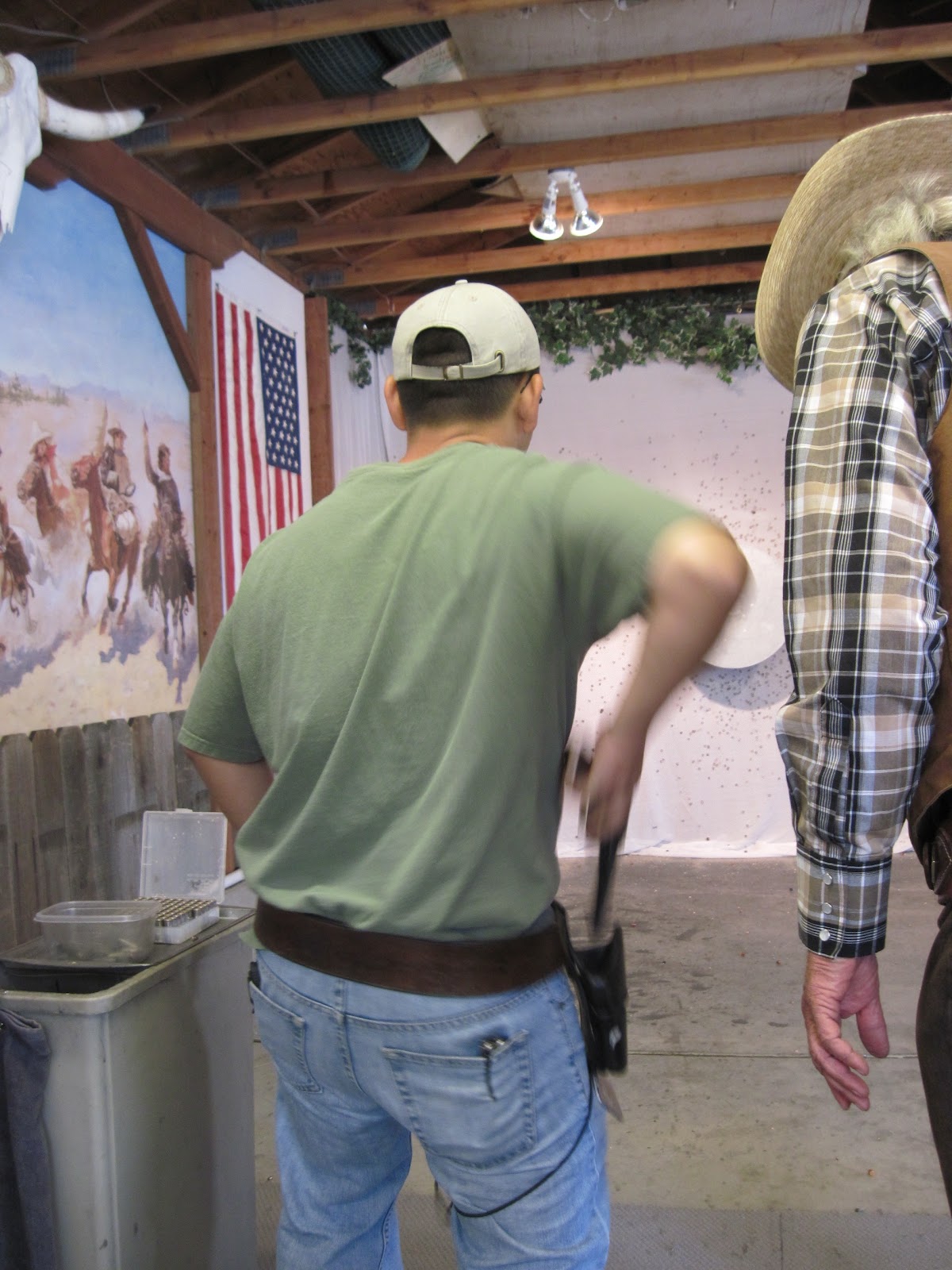
Then there are the range events. We typically have an open range day where everyone sets up their gear, does some shooting, then goes down the line to admire (and try out) everyone else’s guns. The miniature Steel Challenge event gives everyone a chance to try their hand at steel plates. (We do log times, but there’s really no pressure. We’ve even had people shoot stages with single action wheel guns.) As if that wasn’t enough we’ve also had cowboy fast draw competitions which are fun pretty much no matter what


And last but not least we have a raffle.


“A raffle, you say? What’s the big deal?”

It’s actually a very big deal. First off it’s for a very worthy cause. All of the money raised at the GBR goes to Project Valour-IT, a very Soldiers’ Angels program which provides voice controlled laptops and other technology aids to wounded soldiers so that they can maintain communications with friends and loved ones.


If that isn’t enough of a reason, then remember, you can win cool stuff! Last year I won a pistol and several other people won firearms as well. There were pocket knives, gun gear, clothes and all manners of goodies to enjoy.


That brings me to my main point for today. I’ve been in communication with Lori Petoske from Ruger and I’m making arrangements for a Ruger Vaqueros to be in this year’s raffle. What’s more, Lori came back with a very generous offer.

If you’ve followed the GBR, you probably know that Lori and Bea met a couple years ago during the 2010 rendezvous. From what I hear, they had a blast! The following year Bea donated a Ruger Blackhawk like the one she enjoys shooting. Well this year Lori says she and the fine folks at Ruger are interested in donating a firearm in Bea’s Honor!

We have to work out the details but it looks like there will be TWO Ruger firearms in the raffle at GBR this year.


Now what are you waiting for? Go register for the rendezvous, help raise some money for Valour-IT and maybe even win a Ruger!!

Sunday, July 08, 2012

Sometimes I don't know...

...if I'm coming or going!
 Just a quick post to say that I'm still alive. I'll post again soon, but in the meanwhile, here's a picture of a rare beast; a Garratt steam locomotive!

Tuesday, June 12, 2012

Glock, Paper, Scissors

I think I know which one wins.


Last fall I attended the Gun Blogger Rendezvous, an annual fundraiser for Project Valour IT, a worthy cause if ever there was. The big money maker here is the raffle which features products from various firearm and shooting sport manufacturers. They all deserve considerable applause for their contributions, but today’s post is dedicated to the fine folks at GLOCK who donated the pistol that I won in the raffle.

First things first, I received a certificate for a free pistol from Glock. I paid a very reasonable charge to upgrade to a Glock 21 (45ACP) with night sights, but the overall cost was dramatically lower than buying the firearm. This certificate came through the raffle at the GBR, so Glock did not choose me to receive this; they did not ask me to write about it; they did not require that I advertise, glamorize, publicize, or otherwise promote their products. I’ll leave it to you to judge how biased or unbiased my review is.


I’ve had very little prior experience with Glocks. The first time I handled one was when a friend of mine showed me a used 9mm he bought. I recall thinking that the sights were difficult to pick up quickly, making accurate shooting difficult. The trigger pull did not impress me too much either but then again it was used, probably not in the best condition. Since then I’ve mostly stuck to single action automatics rather than striker fire. So it shouldn’t be surprising that I had mixed emotions about getting this new ‘plastic’ gun.

The folks at Glock were courteous and very efficient. They shipped the pistol quickly, so quickly in fact that it was on the way before I could give my FFL dealer proper warning. It arrived though, in nice pristine condition with a cleverly designed plastic case, three mags, a loader, a bore brush, and a cable lock to add to my collection of legislatively mandated safety accessories.


The exterior appearance is all business with a matte black finish on the metal parts and texture molded into grips. The upgraded sights show up well against the dark slide. The inserts glow brightly in low light, so much so that I can spot it on the nightstand easily when the lights are out. Size wise the grip is slightly wider (front to back)  than your typical M1911 and the thickness is a little less than the usual M1911. The real difference comes in when you look at the profile.


The double stack magazine requires quite a bit of space so the grip cross section is more square than that of a firearm designed for single stack mags. This results in a perimeter that’s roughly .87” larger than the M1911 (that’s if you ignore the ergonomic ridges. Personally I was quite pleased with the fit in my hand. I’ve always found the M1911 grip to be not quite ‘meaty’ enough to make my hand fall in the right position. The extra perimeter of the Glock grip put my trigger finger in the right position without any special fiddling on my part.


The size of the Glock 21 limits its usefulness as a concealed carry piece. If you have a large frame you’re probably able to conceal it reasonably well, but my 5’8”/150 (ok 155) frame doesn’t offer quite enough real-estate for me to wear it discreetly unless I can cover it with a loose fitting jacket. That said, being chambered in .45 ACP with a magazine capacity of 13 rounds makes it an excellent sidearm for self-defense in the home or wherever you take it.

Out of the box it functioned perfectly. I’m not surprised; after all, Glock has developed a reputation for very reliable firearms. I’ve fed several kinds of ammo through it with no discernible difference in feeding or operation. I did get bopped in the head a few times by flying brass, but who hasn’t had that happen before?


A search of YouTube will probably turn up a torture test or two showing how many rounds a Glock can fire without cleaning, what kinds of mud and sand it will eat without jamming, and similar such forms of abuse which far exceed any realistic demand on a sidearm. I would add however, that if you’re spending plenty of time outdoors where your sidearm might get extra exposure to the elements and go extended periods without cleaning you could be pretty confident in the continued reliability of this pistol. In other words, if you intend to be hiking, boating, or 4-wheeling in remote areas for an extended period, this wouldn’t be a bad item to have in your kit.


Functionally, there isn’t much in the way of exterior controls. You have a slide release and a mag release in the normal positions plus the take-down catches just in front of the trigger. The slide release is slightly smaller than on the M1911 but large enough for me to use easily after getting acclimated. The mag release button is sizable and easy to find without looking. Both are rounded enough to keep them from snagging on anything while being drawn.


The point of impact is aligned with the top of the sight at about 15 yards, slightly lower at shorter ranges, but not enough to bother compensating. I’m quite certain it is more accurate than I am because when I take my time I can hit a 2 or 3 inch circle at 15 yards. Naturally the groups open up considerably when stringing shots, but it’s easily accurate enough to shoot steel or use for personal protection.

The muzzle flip is not anything unusual, though it does vary a bit over the course of a magazine because of the difference in weight when empty as opposed to being loaded with 13 rounds. Even at its most severe it’s more controllable than your typical compact 45.

The trigger is much better than I had expected. As I said at the beginning, my experience with Glocks was very limited and had left me a little sour on striker fired designs. The quality of the trigger pull actually shocked me when I first tried it. The stroke was smooth and quite light, the break was very clean and the difference in resistance between the two was enough to allow two very distinct motions. By the time I was through with the first magazine, the act of drawing the trigger back and holding it just before the break became so natural that it required no thought at all and I was able to switch back and forth between this and a single action trigger without hesitation.


If my early experience with a Glock had been like this, there’s a good chance I would have been shopping for one some time ago.

Now for the drawbacks.

First a very minor issue, the magazine loader has a small lip in the front that keeps cartridges from engaging the lip of the magazine adequately. One minute with a pocket knife and you can put a notch into this which will make it much easier fill your magazines.


Also, I have a personal preference for serrations in the front of the slide. I don’t believe this is a factory option on any Glocks and I think that’s a bit of a shame, but there’s nothing particularly wrong with that. I’m just being picky.


This is the only really negative thing that I am going to say: a pistol like this needs additional external safety features. Does that mean it’s unsafe? NO. It means that if you want to carry a Glock safely you must rely upon a holster to be your external safety device. In other words, you’re counting on the holster to keep the trigger from being pressed.

I’m not picking on Glock specifically here because if I had my preference, I would want some kind of external safety on any autoloading pistol. I know about the Glock “Safe Action” and I think it’s a nifty design but the fact remains that anything which pushes the trigger can discharge the firearm. Consequently, whenever you are putting a Glock into the holster the gun is still ‘hot’ and that requires some additional precautions.

No matter how skilled and how well trained you are, there’s a good chance that someday when you holster your sidearm the trigger will catch on your clothing, your holster, or the trigger finger that you inadvertently left inside the guard. If you’re lucky you just scare yourself, if you’re unlucky you hit an artery or end up starring in a YouTube video where you’re yelling about the manner in which you just shot yourself. So when selecting a holster for a firearm like this make sure it’s easy to take on and off because if you’ve drawn your firearm, you’ll want to be able to remove your holster, holster your weapon in a safe direction, and replace the holstered firearm without disturbing it. In fact this is a good rule for any firearm you may need to re-holster after you’ve dressed for the day.

Now that I’ve scared you sufficiently let me say again that I have no qualms about owning, using, and carrying this firearm. You just have to make sure you’re doing it properly so that you can stay safe.

Back to the fun stuff!


Field stripping and cleaning is very straightforward. Drop the magazine, check that the chamber is empty, check that the chamber is empty again, point in a safe direction and pull the trigger. Then pull the slide back slightly to take the pressure off the stop. Pull down on both of the takedown catches located forward of the trigger and move the slide forward until it comes off. The spring, guide rod and barrel come right out of the slide and you have access to almost everything for cleaning. If you want to detail strip, you can, but considering the abuse most Glocks are put through, I would just stick with field stripping, swabbing the barrel and hosing the rest out with a little CLP.


Reassembly is even easier. Once you get the barrel, guide rod, and recoil spring back into the slide, just put the slide on the front of the frame and pull it all the way back. You’re done! It’s so simple it makes me wonder why some people brag about how many rounds their Glock can go without cleaning.

All-in-all I must say, I’ve been really impressed by my new Glock 21. My concerns about ergonomics and trigger pull vanished as soon as I tried it. If you’re thinking about getting one of these for yourself, it certainly wouldn’t hurt to compare your grip on the standard Glock 21 with the ‘SF’ model. These models have a slightly smaller grip made for people who don’t feel as comfortable with the full sized design. I tried it and I think the difference is small, but discernible. (The SF feels a bit like a 1911 to me, just without the swell in the middle of the grip.) Either one is quite comfortable, and if mine is any indicator, very fun to shoot!


Thanks again to the folks at Glock for donating this pistol to the raffle at the GBR!

Sunday, June 03, 2012

Quote of the Unspecified Temporal Interval

I know of only one bird – the parrot – that talks and it can’t fly very high.
-Wilbur Wright declining to give a speech.

Monday, May 28, 2012

Up Front


Bill Mauldin had a way of expressing himself in images.  I suspect many people today don't even recall Willie and Joe, but there was a time when they were considered icons of the average man in uniform.  Mauldin said that his business was drawing not writing, but you wouldn't necessarily know that by reading the lines he's put on paper.
When you lose a friend you have an overpowering desire to go back home and yell in everybody's ear, "This guy was killed fighting for you.  Don't forget him-ever.  Keep him in your mind when you wake up in the morning and when you go to bed at night.  Don't think of him as the statistic which changes 38,788 casualties to 38,789.  Think of him as a guy who wanted to live every bit as much as you do.  Don't let him just be one of 'Our Brave Boys' from the old home town, to whom a marble monument is erected in the city park, and a civic-minded lady calls the newspaper ten years later and wants to know why that 'unsightly stone' isn't removed."
-Up Front 1945
I don't think there's any more that can be said.


Saturday, April 07, 2012

Pencil Points

Chicago is having a very warm, early spring this year, following a surprisingly uneventful winter. As the days get progressively longer, you can tell that people everywhere are thinking about outdoor projects of every kind. There are at least a half dozen, well funded, well advertised DIY websites that are happy to help you plan your work so that you can get the most out of the good weather. Most of them are quite eager to tell you how to complete your project, and 'oh, our sponsor has exactly the product you need!' But ask yourself for a moment what you would do without all of the experts on the web offering advice.


Before the big box hardware stores and 24 hour home improvement channels were around, most home owners turned to publications like Popular Mechanics, and chances are there was a project every month or two that was useful to every reader. But if you needed to know how to do anything and everything you needed something more like this.

Pencil Points, known as "a journal for the drafting room," was an architecture and design magazine dating back to 1920. Many of it's design article are still available today in republished collections. Among the articles published were Don Graf's Data Sheets, in which he presented information on building materials, construction techniques, design constraints, and various other useful articles, all compiled into succinct little descriptions, charts, and diagrams which seldom filled more than two or three pages.

This compilation (printed in 1945) has articles that cover requirements and building layouts for virtually every kind of commercial buildings as well as design parameters for all sorts of residential and recreational structures.

Suppose that you were enjoying a lovely spring day in the late '40s and decided that you wanted a fancy new grill to entertain your friends and neighbors that summer. You could just browse through this compilation of Dan Graf's work and find a design for a nice fancy grill you can build in a couple of weekends.


Of course once the guests are over you'll want to keep them entertained, so maybe a few games of croquet would be in order.


Better yet, how about a few rounds of horseshoes? I like a game where close counts.


After the guests are gone and the dishes are washed, maybe you'll need a place where you can quietly relax away from the hustle and bustle of your daily life.


This doesn't even begin to scratch the surface of the information contained in this book. Most of the pages won't tell you every single thing you need to know to finish a project. There are no step-by-step instructions, but there's enough information that someone smart and determined could almost always get the job done.

Now, back to that shooting range on page 180

Saturday, March 03, 2012

Joe Coolant

This may not seem like the time of year when you need to worry much about cooling, but most of us have at least one cooling system that needs to be running well year-round.


Yep, the coolant in your car is still working just as hard in spite of the mild weather.

Last fall I had a bit of a scare with my Ford. For a few months I had noticed a gradual loss of coolant, and like anyone who knows a bit about cars I started dreading the possibility of a dead water pump. So I crawled under the Exploder and took a peak. No seepage from the water pump. What a relief! At least I wouldn't have to worry about replacing that, but where was the leak? I had replaced a failing radiator hose clamp so I knew the problem wasn't there. The hoses were still quite pliable and not showing any cracks. Still there was a leak


So I did some googling. Apparently the fittings for the ATF heat exchanger (mounted in the side tank of the radiator) have a reputation for leaking ATF into the radiator (overheating your engine) or leaking coolant into the ATF (ensuring a burnt out transmission in very short order.) So I checked the coolant for discoloration and the transmission fluid for signs of moisture. Nada! This was getting frustrating
Then one day after work I left the car in the drive for a few minutes, intending to run errands before it got too late.
I came back to this.


Well if I can't spot it now I must be blind, so I got the flashlight and mirror and started looking around. Sure enough I found the leak, but it wasn't where I would have expected


That's the side tank of the radiator, and that's a crack which must have been slowly expanding for months.
The side tanks are made of a high density plastic, which is actually quite rugged and probably more cost effective to make than brass or aluminum tanks. The problem is, that when it finally fails, there's no bringing it back, you have to replace the whole thing. Luckily for me I live in the information age and one google search and two phone calls later I had tracked down a brand new radiator at an Auto parts store that was still open. I drove very carefully there and back, trying to avoid hitting any bumps for fear that I would suddenly see a cloud of sickly sweet steam billow up from the hood.

I made it back just fine though, and with a little help from these guys I managed to install and burp the new radiator by the wee hours of the morning.


If I did it again I could probably have gone fast enough to finish the job and still get a good night's sleep.

So how would this scenario have gone in an older vehicle? Well has anyone else noticed how few radiator shops are out there? There used to be little shops all over the place that specialized in brazing and when you had a coolant leak you could go to them to have your radiator pressure tested, then when they identified a leak they would get out the torch patch it up so your radiator was water tight again.


More on the Flathead V8 (+/-)

For those of you who are a fan of the flathead engine pictured above, here are a few pictures from my 1937 guide to Ford V8s. I would take this information with a grain of salt though. You’ll notice the coolant system description highlights the importance of the height of the radiator, indicating that this is used to assist the natural, buoyancy driven circulation system. Don’t count on it!


These engines have a reputation for overheating, partly because the water pumps on earlier models were not quite up to snuff, and partly because of the routing of the exhaust through the engine block. Frequently steam bubbles would develop in the water jacket, leading to overheating and cracking of the block, which would then allow exhaust gasses to blow into the water jacket, making the overheating worse. It’s really rather amazing the design lasted as long as it did.

Close

Improved manufacture techniques and the use of plastic tanks on radiators have pretty much eliminated this market. Now you just go to a shop where they automatically recommend new hoses, a new water pump, and a new radiator all while trying to sell you a coolant flush, fuel injector cleaner, and a new serpentine belt on every visit.


There's very little on a coolant system that you can't actually fix at home. A pressure tester is handy for diagnosing leaks as well as faulty radiator caps. A garden hose, some tubing, and a few clamps are sufficient to flush most coolant systems (a procedure which is rarely as necessary as the shops might tell you) and if you are having thermostat trouble, there's a very simple test for you to diagnose the problem.


Of course any time automotive parts and kitchen wares cross paths, you may want to tactfully present the idea to other members of the household in case there are potential objections to the taste of ethylene glycol in the morning coffee!

Saturday, February 25, 2012

Jolly Good!


I'm flying home from England this weekend, which means it's time to start re-setting the internal clock by a little disruption of my sleep pattern. And that is the perfect time to put together a post!


Dirtcrashr over at Anthrobogology has apparently named me as a Liebster blog!
OK so the way this works, is, if I understand it correctly, is that once awarded a Liebtser you're supposed to identify 5 other worthy recipients, each of whom have less than 500 followers, then leave a comment on each blog with a link back to your award post, hoping they continue to spread the love. So for my Liebster blogs are...

I would say Mr. Completely, patron saint of the Gun Bloggers Rendezvous (a fund raiser for Soldier’s Angels) but he’s already been nominated at least once so I’m going to nominate his better half over at Kee wee's Corner! A delightful place for fun light reading and some beautiful posts.

Next up, Mr. B and Midwest Chick, wonderful folks, good writers, and both equally handy with shooting irons and kitchen implements.

Since it’s the weekend I’m going to recommend you spend some time Near the Salty City where you you’ll find enough good tunes to make a good sound track for your Saturday night.

Last but not least, if you haven't visited the Smallest Minority, you certainly should! And while you're at it, check out the Kalashnakitty T shirts!

So everyone please pass along your awards and keep the chain going.

And with that, I'll get back to packing.


Well, maybe a few more pictures!


Monday, February 13, 2012

Duct tape is forever!

Let’s play ‘what if’ for a moment.

You come to the work in the morning and look at the calendar. February 14. That sounds familiar; ah wait, it’s Valentine’s day. You haven’t bought a gift, or even a card. You would call the florist, but that costs money and it’s the last minute so it will cost extra and it’s probably out of the way on the trip home.

What to do…

I say, take a cue from Red Green and go get some duct tape.


You can find instructions for duct tape roses elsewhere online, but I’ve tweaked them a bit and I think the results are quite nice.

Start with two rolls of Duck brand duct tape, one green and one red. You’ll also need some wire, but you should already have this in the emergency kit in your car right?!


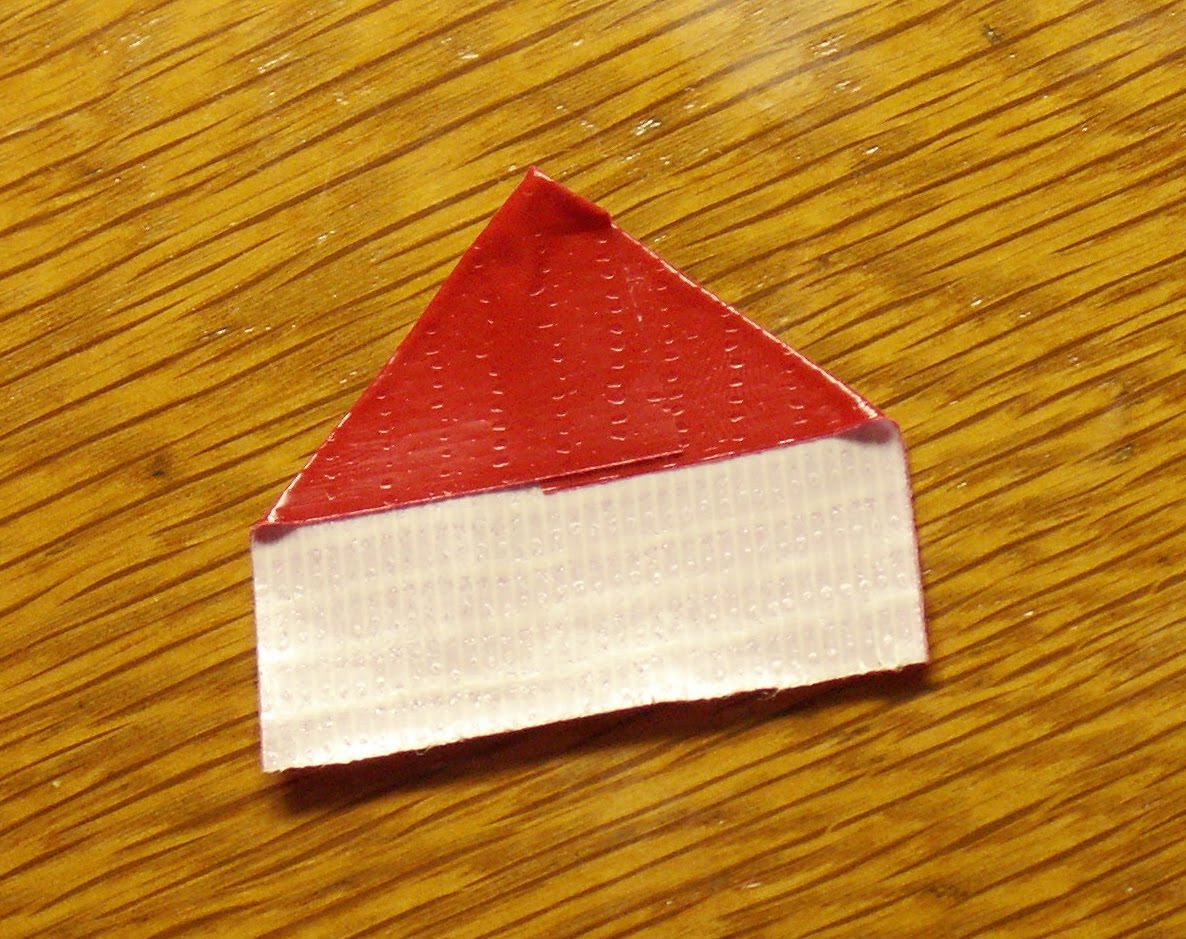
Start with a wire (In this case left over from rewiring my house) and wrap it with green tape. Then cut the first petal from red tape. Cut a piece that’s roughly square then fold the corners like so.


And so


Wrap it around the stem to form the center of the rose.


Now here’s the trick to getting something that looks like a rose and not just a wad of duct tape. Slit a foot long piece of duct tape into halves or thirds. Wrap this around the base of the first petal.


Because the petals are thicker at the top than the base, this wrap is needed to keep the blossom from turning into a cone. You’ll want one of these strips for every 5 or 6 petals you put on the flower.


Begin wrapping petals around the stem, followed by the thin strips.


Once the blossom is looking full (at least a dozen petals or more,) wrap the base of the blossom with green tape.


Make a few leaves from the green tape. These can be a bit taller than the red petals.

Surround the blossom with a few green leaves then add a couple leaves to the stem.


Repeat to make a bouquet or add to a vase and act like you planned this all along.


You just saved about 30 dollars on a bouquet of roses!

And remember, I’m pulling for you! We’re all in this together.